27.-29.8.2026 / Urkuyö ja Aaria -festivaali, Espoo
Johann Sebastian Bach: ‘Schauet doch und sehet’ BWV 46
Johann Sebastian Bach: ‘Quodlibet’ BWV 524
Kurt Weill: Mahagonny – ein Songspiel (T: Bertolt Brecht & Elisabeth Hauptmann)
Johann Sebastian Bach: An Wasserflüssen Babylon BWV 653
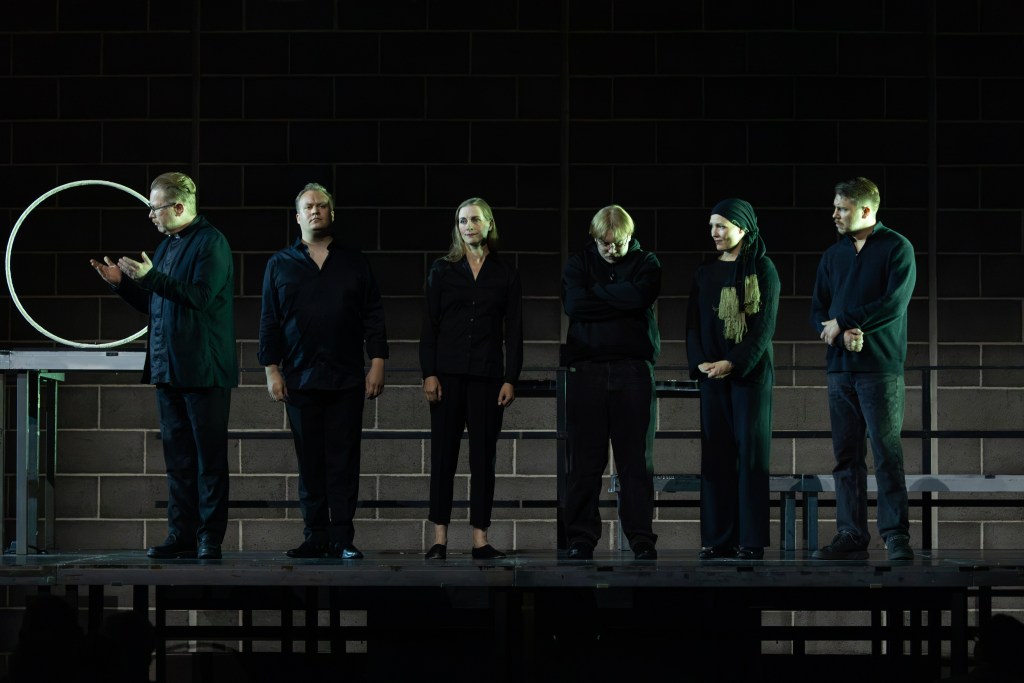
Tuuli Lindeberg, Salome
Elli Vallinoja, Ursula
Joonatan Pylkkönen, Johnny
Niilo Erkkilä, Charlie Pantagruel
Aarne Pelkonen, Kantis / The Regular
Nicholas Söderlund, Pappi / Clergyman
Ensemble:
Paula Sundqvist & Tuuli Talvitie, viulu / violin
Samuel Buron-Mousseau & Laure Paris, klarinetti / clarinet
Tomas Gricius & Janne Ovaskainen, trumpetti / trumpet
Olav Severeide, pasuuna / trombone
Tuija-Maija Nurminen, lyömäsoittimet / percussion
Jaime Esteves-Moreira, saksofoni / saxophone
Kirill Kozlovski, piano ja urut / piano and organ
Dramatisointi ja ohjaus / Devised and Directed by Aleksi Barrière
Lava- ja valosuunnittelu / Stage and Lighting Design Étienne Exbrayat
Videosuunnittelu / Video Design Lucia Schmidt
Musiikinjohto / Musical Direction Jukka Untamala
Lauluyhtyeen valmennus / Preparation of the vocal ensemble Tuuli Lindeberg
Korrepetiittorit / Rehearsal pianists Saki Kono & Kirill Kozlovski
Tuotanto / Production Joonas Mikkilä
Valotekniikka / Lighting operator Janne Teivainen
Tuotanto / Produced by: Urkuyö ja Aaria, Kimaira ry, La Chambre aux échos
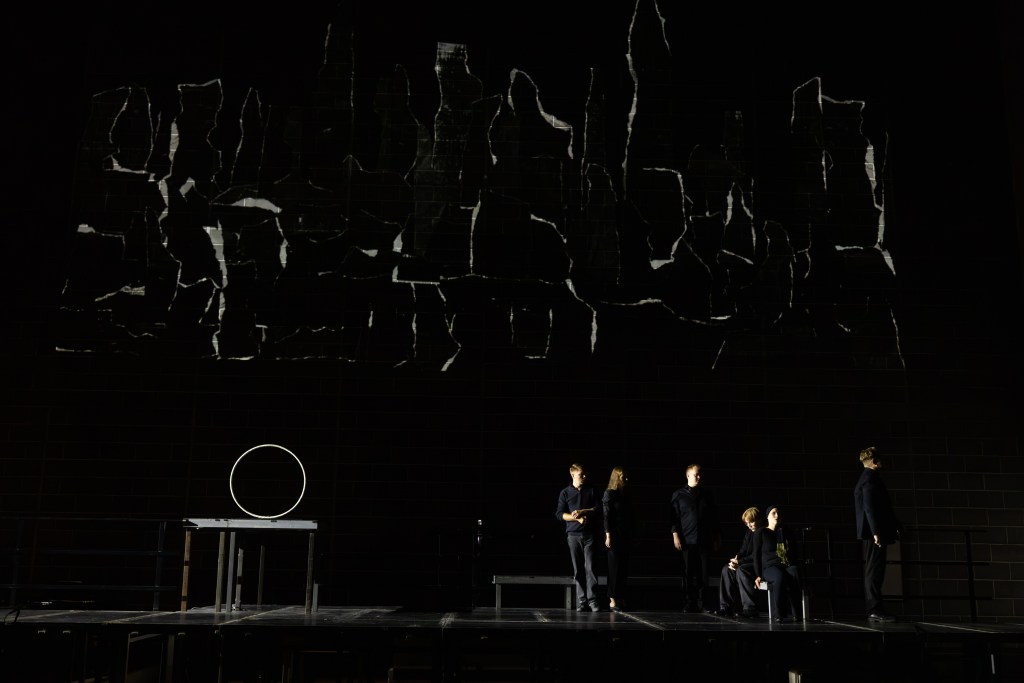
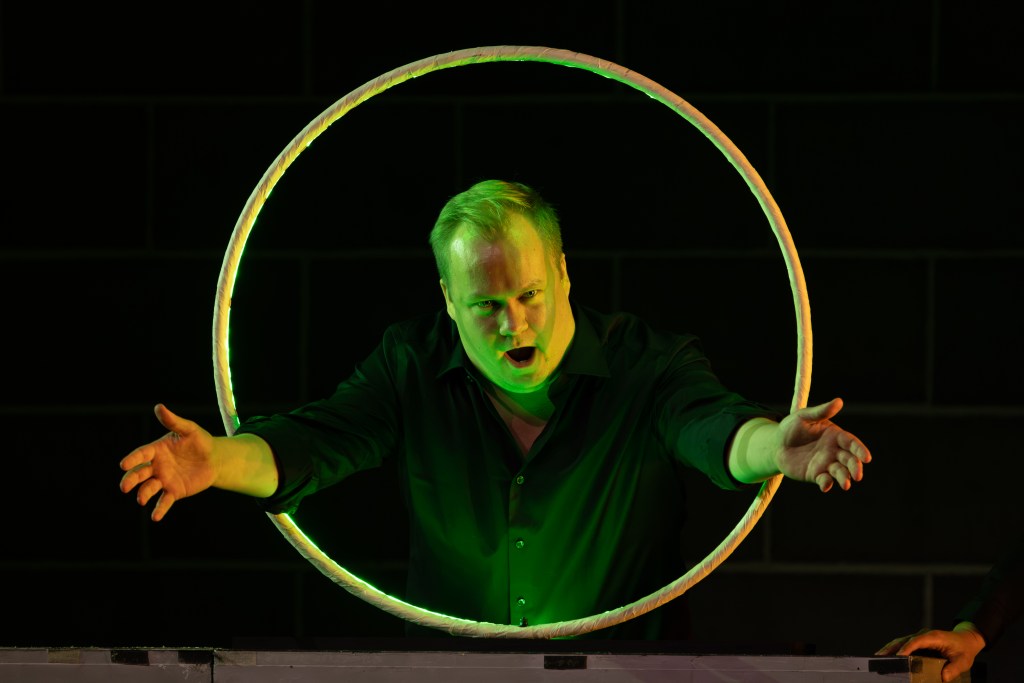
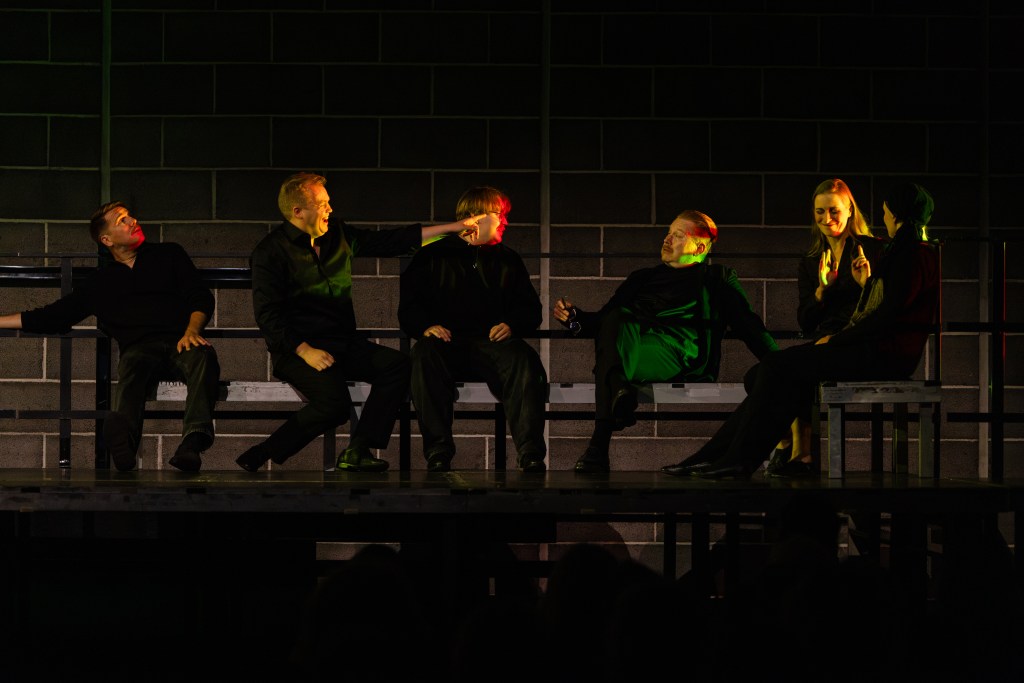
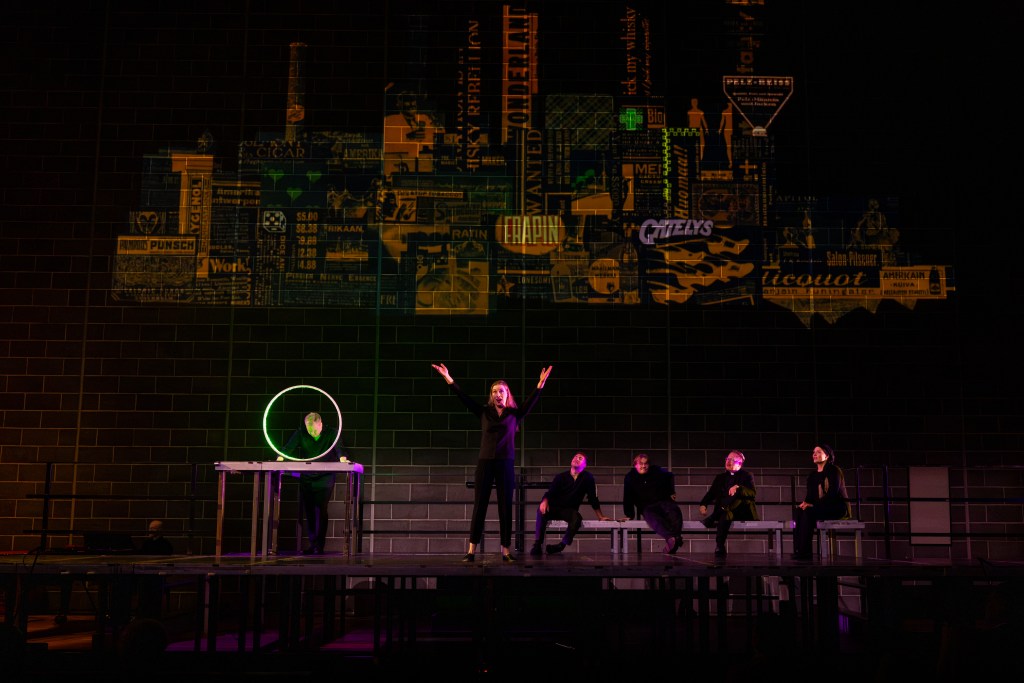
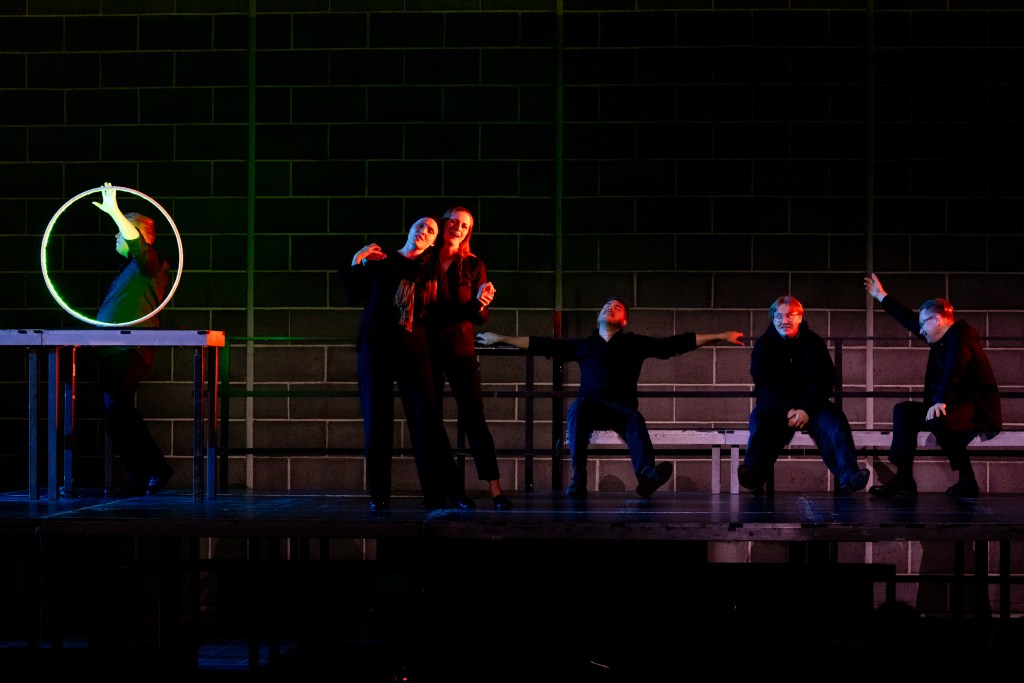
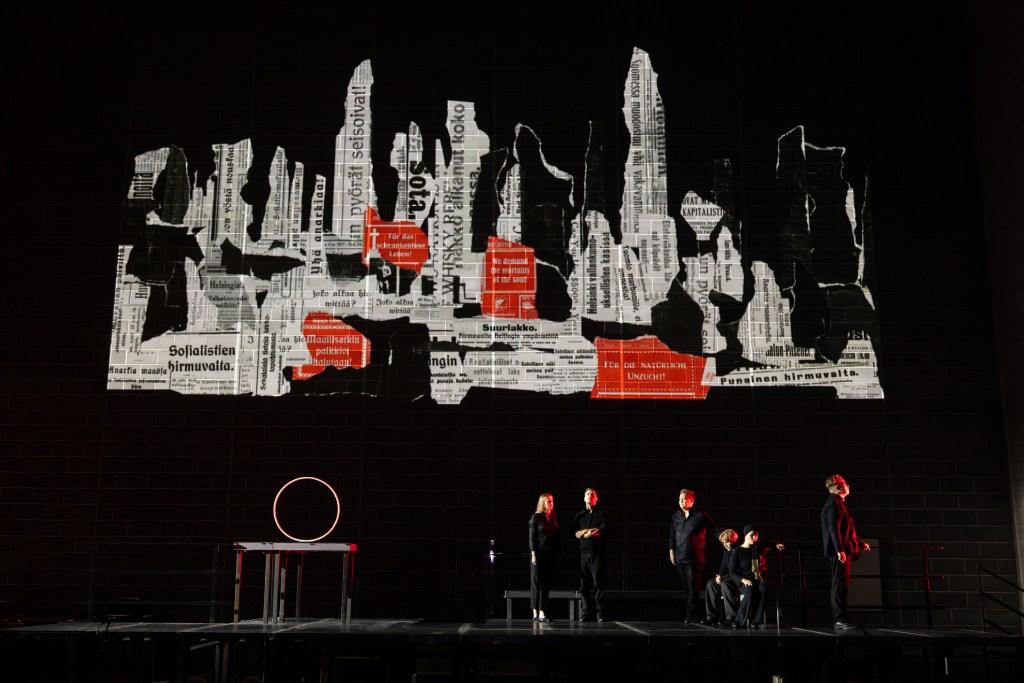
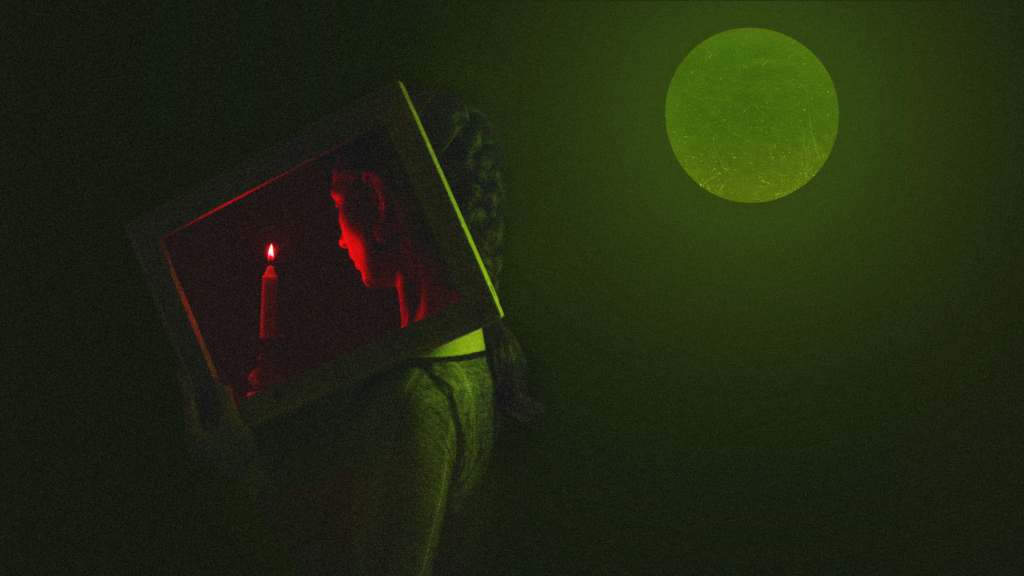
FI | Säveltäjä Kurt Weill ja näytelmäkirjailija Bertolt Brecht kehittivät vuonna 1927 Mahagonny-Songspielin Bachin kirkkokantaattien mallin mukaan ja Valitusvirsi-perinnettä ammentaen. Kantaatti kertoo eksyneiden sielujen kaupungista Mahagonnysta, villin lännen Babylonista. Kun Jumala saapuu tuhoamaan uuden Gomorran, on asukkaiden todettava, että he elävätkin jo helvetissä. Prologina kuullaan Bachin kaksisataa vuotta aikaisemmin säveltämä kantaatti BWV 46, joka samalla tavoin perustuu Valitusvirren materiaaliin ja esittää yksinäisyytemme paradoksin: kaikki äänet laulavat kuorossa omasta kärsimyksestään ikään kuin huomaamatta, että nimenomaan sama kärsimys on heille kaikille yhteistä.
Esityksen keskiössä ovat teosten poliittinen ja hengellinen syvyys sekä musiikillinen vuoropuhelu: Bachin kantaatit ja koraalit yhdistyvät saumattomasti Weillin jazz-vaikutteiseen sävelkieleen, ja Bachin humoristinen Quodlibet kietoo Mahagonnyn absurdiuden kirkkomusiikin muotokieleen. Illan päättää koraalipreludi ‘An Wasserflüssen Babylon’, jonka melankolia ja kromatismin rikkaus tarjoavat meditaation mahdollisuuden Bachin syvällisimmän sanoman raameissa: vaikkemme kuule taivaan vastauksia, laulamme sille peloistamme yhdessä.
EN | In 1927, composer Kurt Weill and playwright Bertolt Brecht developed the Mahagonny-Songspiel following the model of Bach’s church cantatas and drawing inspiration from the tradition of the Lamentations. The cantata tells the story of Mahagonny, the city of lost souls – the Babylon of the Wild West. When God arrives to destroy this new Gomorrah, the inhabitants are forced to realize that they are already living in hell. As a prologue, the audience hears Bach’s cantata BWV 46, composed two hundred years earlier, which likewise draws on the material of the Lamentations and presents the paradox of our loneliness: all voices sing together in a choir about their own suffering, almost without noticing that it is precisely this shared suffering that unites them.
At the heart of the performance are the political and spiritual depth of the works and their musical dialogue: Bach’s cantatas and chorales merge seamlessly with Weill’s jazz-influenced musical language, and Bach’s humorous Quodlibet intertwines Mahagonny’s absurdity with the formal world of sacred music. The evening concludes with the chorale prelude An Wasserflüssen Babylon, whose melancholy and chromatic richness offer a moment of meditation within the framework of Bach’s most profound message: even if we do not hear heaven’s answers, we sing of our fears together.